
What Is a Secret Rare Pokémon Card? How to Spot One and What It Is Worth
PullBull TeamUpdated 7 min read
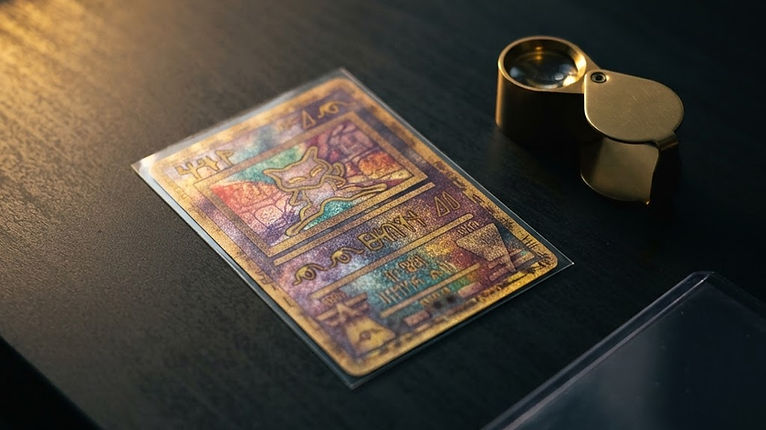
You open a pack, flip a shiny card over, and the number in the corner reads something like 205/198. That is not a misprint. It is one of the clearest signs you pulled a secret rare, the cards collectors chase hardest in modern sets.
This guide explains what a secret rare is, how to recognize one in seconds, the main types you will see, and how to work out a fair value before you sell, grade or bid.
A secret rare is a card whose collector number is higher than the official set total printed after the slash. If a set lists 198 cards and your card says 205/198, it sits outside the "main" set list. That is why it is called secret: it is not counted in the visible total.
The idea goes back a long way in the hobby, but modern Scarlet & Violet and Sword & Shield era sets use it heavily. Most current sets have a block of secret rares at the end of the numbering.
If the number is inside the set total, the card can still be valuable, but it is not a secret rare by the numbering definition.
Pokémon has changed its naming over the years, so the same idea shows up under different labels. These are the ones collectors talk about most.
Gold cards with gold borders and etched texture. They have been used for Pokémon, trainers and items. Gold items and trainer cards are often cheaper than gold Pokémon, but some playable gold cards still hold demand.
Common in the Sun & Moon and Sword & Shield era. A rainbow foil pass over a full art Pokémon V, VMAX, GX or trainer. Prices vary a lot by the Pokémon on the card.
Scarlet & Violet sets moved toward special illustration rares (scenes that fill the whole card, often showing the Pokémon in its environment) and hyper rares (gold, textured cards). In current sets these tend to be the chase cards, and special illustration rares of popular Pokémon often lead the price lists.
Some sets include shiny versions of Pokémon numbered past the main list. Collectors who chase shinies often target these specifically.
In some early sets, a few cards were numbered beyond the set total too. If you collect older sets, confirm the exact set and number, because condition and edition matter just as much as the secret status. See how to tell if a Pokémon card is 1st Edition for vintage checks.
No. "Secret rare" tells you the card is scarcer to pull from packs, not that it is automatically expensive. Value depends on:
The practical takeaway: two secret rares from the same set can be priced very differently. Always check the exact card.
Use the same process for any card:
Our full walkthrough on how much your Pokémon cards are worth goes deeper. If you plan to bid, our guide on how much to bid on Pokémon cards shows how to set a max bid from sold comps.
Grading makes sense when the card is in demand and looks clean enough to have a real shot at a high grade. Before you send anything:
If the raw value is low, grading often costs more than it adds. Read is it worth grading Pokémon cards and raw vs graded Pokémon cards before deciding, and see PSA vs CGC vs BGS to choose a grader.
Because gold and rainbow cards are popular, they are common targets for fakes. Warning signs include:
For a full checklist, see how to spot fake Pokémon cards.
Sleeve it right away, then put it in a toploader or card saver. Textured cards scratch easily, so avoid sliding them across tables. Keep them away from heat, sunlight and humidity. Our guide on how to store Pokémon cards covers the basics, and how to ship trading cards safely helps when you sell.
When you list one, show the front, back, corners and a tilted shot of the foil in good light. Buyers of textured cards want to see surface condition clearly. Our guide on how to photograph trading cards shows a simple setup.
When you buy, ask for extra photos if the surface is not clear, compare the listing to sold prices, and decide your max price before the auction ends. See how to win online card auctions for timing and bidding tips.
What does a number like 205/198 mean on a Pokémon card? It means the card is numbered past the set total of 198, which marks it as a secret rare in that set.
Is a secret rare the same as a full art? Not always. Many secret rares are full art, but some full art cards sit inside the main set numbering. The numbering is what makes a card secret.
Are gold Pokémon cards secret rares? In most modern sets, yes. Gold cards are usually numbered past the set total and use a gold rarity treatment.
Are all secret rares expensive? No. Value depends on the Pokémon, the set, condition, language and grading. Some secret rares sell for little, while others are top chase cards.
Should I put a secret rare in a toploader? Yes. Sleeve it first, then use a toploader or card saver to protect corners and the textured surface.
Can secret rares be fake? Yes. Gold and rainbow cards are popular with counterfeiters. Check texture, fonts, numbering and price before you buy.
A secret rare is any card numbered higher than its set total. It is harder to pull, but its value still comes down to the exact card, its condition and recent sold prices. Check the number, protect the card, price it from real sales and decide on grading with clear eyes. When you are ready to explore cards, visit PullBull.
Browse live auctions and listings on PullBull.
Browse Pokémon card auctions on PullBull