
How to Spot Fake Pokémon Cards: 12 Checks Before You Buy Online
PullBull TeamUpdated 10 min read
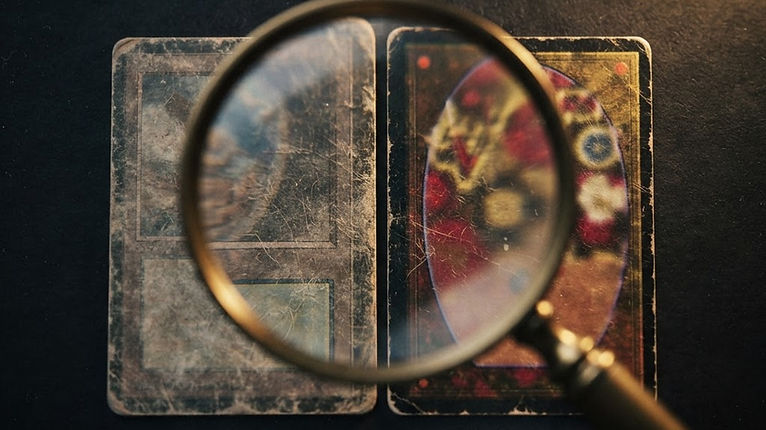
Counterfeit Pokémon cards have been around almost as long as the game itself, and they are not going away. Some are obvious, with blurry art and spelling mistakes. Others are good enough to fool a casual buyer, especially in a small photo on a phone screen. The good news is that most fakes fail at least one simple check, and you do not need special equipment to run most of them.
This guide walks through how to spot fake Pokémon cards, both raw cards and graded slabs, and how to protect yourself when you buy online, where you often cannot hold the card before you pay.
The single most useful thing you can do is keep a few genuine cards from your own collection nearby, ideally from the same era as the card you are checking. A common card from the same set is perfect. Almost every check below is easier when you can put the suspect card, or its photo, next to a card you know is real.
Genuine cards are carefully proofread. Fakes often have typos in attack names, odd capital letters, missing words or broken grammar in the card text. Look closely at the word Pokémon itself: on English cards it carries the accent on the e. A missing accent, or a strange symbol in its place, is a strong warning sign.
Compare the font of the name, the HP, the attack text and the small print at the bottom with a genuine card from the same era. Counterfeits often use a font that is slightly too thick, too thin or the wrong shape, or they place text a little off center. Small details like the spacing between the HP number and the type symbol are easy for a counterfeiter to get wrong.
Energy symbols on real cards are crisp, evenly sized and correctly colored. On fakes they can look flat, blurry, the wrong size, or slightly misaligned inside their circles. Check the attack costs, weakness, resistance and retreat cost symbols, not just the big type symbol at the top.
Fakes are often too saturated, too dull, or have a washed-out look. Zoom in on the artwork. Genuine cards are sharp, while many counterfeits show fuzzy edges, visible pixels or a slightly blurry finish, because they were copied from a scan or an image online.
The back is one of the fastest checks. Compare the blue swirl, the red and white Poké Ball and the logo with a genuine back. On many fakes the blue is the wrong shade, too light, too purple or too dark, and the swirl pattern looks blotchy or low resolution. If the back looks off, you rarely need to go further.
Holo cards are a favorite target for counterfeiters, and the foil is hard to copy well. Tilt the card under a light. Genuine holos have a specific pattern for their set and rarity, and the shine sits in the right parts of the card. Fakes often have a generic rainbow sheen across the whole card, foil where there should be none, or a pattern that does not match genuine copies of the same card.
Many modern full art, secret rare and special illustration cards have a fine raised texture you can feel with your fingertip and see when you tilt the card. Many fakes are completely smooth, or have a texture that does not follow the artwork. Check what the genuine version of that exact card should feel like, because not every modern card is textured.
Every card has a set symbol and a collector number, for example a number out of the set total. Look up the card in a reliable database and confirm that the set symbol, number, rarity symbol, illustrator name and artwork all match. Fakes sometimes mix details from different sets, use a card number that does not exist, or show a rarity symbol that does not belong on that card.
Genuine cards have a particular stiffness and finish. Many fakes feel thinner, flimsier, glossier or waxier, and bend too easily. If you have the card in hand, compare how it flexes next to a genuine card, gently. Some collectors also compare the weight on a small gram scale against a genuine card from the same era, since many fakes are lighter or heavier.
Look at the edge of the card under good light. Genuine modern Pokémon cards are made from layered card stock, and many collectors check for a thin dark layer visible in the middle of the edge. Many fakes are a single solid layer of white stock. This check works best side by side with a genuine card, because older cards and some printings can look different.
Hold a phone flashlight behind the card in a dim room, and do the same with a genuine card. Real cards usually let only a soft, limited glow through, because of their layered stock. Many fakes let much more light through, or light up in a noticeably different way. Use it as one signal among several, not as final proof.
Fakes are not only loose cards. Counterfeit booster packs, boxes and tins exist too. Check for wrong logos, poor shrink wrap, misspelled packaging and suspicious seams. And always ask why a price is so low. A rare chase card offered far below recent sold prices, especially in bulk from one seller, is one of the clearest warning signs there is.
One check we do not recommend: the rip test. Tearing a card in half to look at the inner layer does prove whether it is real, but it destroys the card, so it is only for cards you are willing to lose.
Graded cards are not automatically safe. Fake slabs and swapped cards exist, and they usually target higher-value cards.
Verify the certification number. Enter the cert number from the label on the grading company's website, such as PSA, CGC, BGS or SGC. Check that the card name, set, number, year and grade in the database match the label and the card in the slab. If the company shows an image for that cert, compare it too.
Check the label closely. Compare the font, spacing, logo, colors and any hologram or security features with genuine labels from the same company and the same label era.
Inspect the case. Look for poor plastic, uneven seams, signs of tampering, or a card that sits loosely or crooked in a way that genuine slabs do not.
Check the card itself. A real slab can still hold a card that was swapped in after tampering. Run the raw card checks above on what you can see through the plastic.
If you want to understand what grades and condition terms really mean, our trading card condition and grading guide explains it.
When you buy online, you only have photos and the seller's word. Watch for these warning signs:
Before an auction ends, ask the seller for extra photos of the front, back, corners and edges, and a short video tilting the card under light if it is a holo or textured card. Genuine sellers are usually happy to help, and our guide on how online card auctions work covers more ways to bid with confidence.
PullBull is a pre-launch marketplace and auction site for collectible trading cards, including Pokémon. Sellers list graded or raw cards as timed auctions, each auction page shows the card details and bid history, and buyers can use a watchlist and contact sellers directly.
Paid checkout and payment protection are not active yet. Use the contact seller button before you bid to ask for extra photos, the cert number of a graded card, and to agree on packing, tracking and postage. For the full picture of what is live today, read What is PullBull?
Browse Pokémon and other trading card auctions. Check the photos, ask questions and bid with confidence. Browse auctions on PullBull
How can I tell if a Pokémon card is fake? Compare it with a genuine card from the same era. Check the spelling, font, energy symbols, colors, card back, holo pattern, set symbol and card number. Most fakes fail at least one of these checks.
What is the easiest way to spot a fake Pokémon card? The card back and the text are usually the fastest checks. A wrong shade of blue, a blurry swirl, typos or a missing accent on Pokémon are common giveaways.
Does the light test work for Pokémon cards? It is a useful signal. Many fakes let more light through than genuine cards. Always compare with a real card from the same era, and combine it with other checks.
Can graded Pokémon cards be fake? Yes. Fake slabs and swapped cards exist. Always verify the certification number on the grading company's website and check that the label, grade and card match.
Are cheap Pokémon booster packs fake? Not always, but a sealed product priced far below normal, with poor wrapping or odd packaging, is a warning sign. Buy sealed products from sellers you trust.
Is the rip test the only way to be sure? It proves whether a card is real, but it destroys the card. For any card you want to keep or sell, rely on non-destructive checks and expert opinions instead.
What should I ask a seller before buying online? Ask for clear photos of the front, back, corners and edges, a tilt video for holo or textured cards, and the cert number for graded cards. Also agree on packing and tracking before you pay.
You do not need to be an expert to avoid most fake Pokémon cards. Compare with a genuine card, check the text, back, holo, set details and card stock, verify every graded slab by its cert number, and treat prices that look too good with real suspicion. When you buy online, ask for better photos and clear answers before you commit. When you are ready to see what collectors are listing, browse auctions on PullBull.
Related: Trading card condition and grading guide · How online card auctions work · How to ship trading cards safely · What is PullBull?
Browse live auctions and listings on PullBull.
Browse auctions on PullBull
Learn card condition grades from Near Mint to Damaged, raw vs graded, and how PSA, BGS, CGC and SGC differ for Pokémon, sports, MTG and One Piece.
