
How to Store Pokémon Cards: Sleeves, Toploaders, Binders and Boxes
PullBull TeamUpdated 10 min read
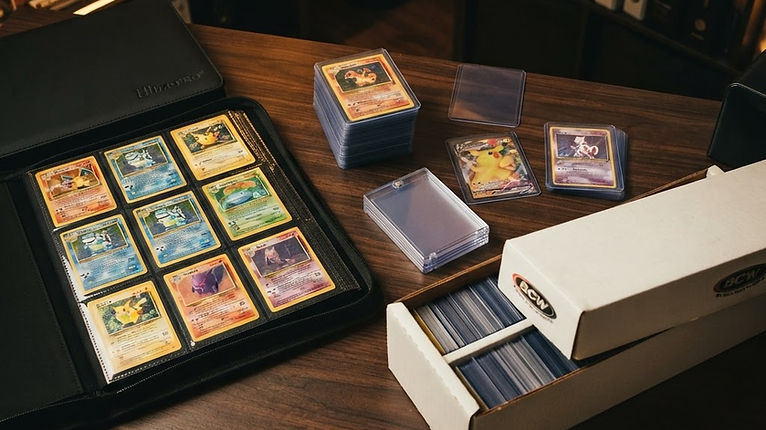
How to Store Pokémon Cards: Sleeves, Toploaders, Binders and Boxes
A card's condition is a big part of its value. Two copies of the same card can sell for very different prices just because one has a soft corner or a scratch on the holo. Most of that damage does not happen while playing. It happens in storage: a card rubbing against another card in a box, a binder page that bends a corner, or a shelf in direct sunlight.
Storage protects a card while it is yours; once it sells, How to Ship Trading Cards Safely covers packing it so it arrives in the same condition.
The good news is that storing Pokémon cards properly is cheap and simple. This guide covers which supplies to use for which cards, how to store graded slabs, and the common mistakes that quietly lower the value of a collection.
Not every card needs the same protection. Sorting first saves money on supplies and makes your collection easier to manage later. A simple split works for most collectors:
If you are not sure which pile a card belongs in, check recent sold prices first. Our guide on how much your Pokémon cards are worth shows how to do it quickly.
Penny sleeves are thin, soft plastic sleeves that fit one card. They protect the surface from scratches, fingerprints and dust. They are the first layer for almost every card worth more than bulk.
Look for sleeves labeled acid-free and free of PVC. Some older or cheaper plastics can react with cards over time, so it is worth paying a little more for archival-safe sleeves.
Players often use perfect fit inner sleeves plus thicker deck sleeves on top. This double-sleeving keeps cards protected during play and shuffling. For collection storage, a single penny sleeve or a perfect fit sleeve is usually enough before the next layer.
A toploader is a rigid plastic holder that a sleeved card slides into from the top. It stops bending and protects corners and edges. Standard toploaders fit a sleeved card. Thicker cards and some jumbo cards need larger sizes, so check the size before you buy.
Always put a card in a penny sleeve before it goes into a toploader. Sliding a bare card into a toploader can scratch the surface or catch a corner on the opening.
Semi-rigid holders are slightly flexible and have a wider opening. Many collectors use them for cards they plan to send to a grading company, because the card is easy to remove without touching the surface. Check the current submission rules of the grading company you use, since accepted holders can differ.
One-touch holders are thick, clear cases that close with a magnet. They look good on display and give strong protection for high-value raw cards. Choose the right thickness for the card so it does not move inside the case.
Binders are great for organizing a set and enjoying your collection. Not all binders are equal, though:
Cardboard storage boxes made for trading cards are the easiest way to keep bulk. Look for boxes labeled acid-free. Pack cards upright and snug, but not so tight that you have to force cards in or out. Use dividers to separate sets or types so you are not flipping through cards over and over, which wears edges.
For toploaders and one-touch holders, there are boxes sized to fit them. Keep them standing upright rather than stacked in tall piles where the weight presses on the bottom ones.
| Card type | First layer | Second layer | Where to keep it |
|---|---|---|---|
| Bulk | None, or penny sleeve if you prefer | None | Cardboard storage box |
| Mid-value singles | Penny sleeve | Binder pocket or toploader | Side-loading binder or toploader box |
| High-value raw cards | Penny sleeve | Toploader or one-touch | Toploader box or safe display |
| Cards for grading | Penny sleeve | Semi-rigid or toploader, per the grader's rules | Box until you ship |
| Graded slabs | Optional slab sleeve | None needed | Slab box or display stand |
This is a common setup, not the only right answer. The rule behind it is simple: the more a card is worth, the more rigid and individual its protection should be.
Graded slabs are already sealed and protected, but they still need care:
If you are deciding which cards to grade at all, see is it worth grading Pokémon cards? and our comparison of PSA vs CGC vs BGS.
The best supplies will not help if the room is wrong. Pay attention to four things:
A closet shelf in a living area of the home is often a good spot, because it stays at a normal room temperature and away from light.
When you sell, good storage pays off twice. The card is in better condition, and it is already sleeved and protected when it is time to ship. Before listing, check the card's grade honestly with our trading card condition and grading guide, take clear photos with the tips in how to photograph trading cards, and pack it properly using how to ship trading cards safely.
PullBull is a card-focused marketplace built around collector stores and timed auctions. Sellers get their own store, each auction shows its opening bid, bid history and a bid trend chart, and buyers can filter by condition and by graded or raw. Cards that were stored well show it in their photos, which helps buyers trust a listing.
PullBull is in an early, pre-launch stage, so the number of listings is still small. Paid checkout and payment protection are not active yet. Buyers and sellers use the contact seller button to agree on packing, tracking and postage before going ahead. Learn more in what is PullBull?
Curious how collector stores and card auctions look? Browse auctions on PullBull
What is the best way to store Pokémon cards? Put valuable cards in a penny sleeve first, then in a toploader, one-touch holder or a side-loading binder pocket. Keep bulk in acid-free cardboard storage boxes. Store everything in a cool, dry place away from sunlight.
Are binders safe for Pokémon cards? Yes, if you use side-loading pages, one card per pocket, and avoid ring binders for valuable cards. Zip binders and post-bound binders with fixed pages are popular choices.
Should I put Pokémon cards in a sleeve before a toploader? Yes. A penny sleeve protects the surface and corners while the card slides in and out of the toploader.
How should I store bulk Pokémon cards? Use cardboard storage boxes made for trading cards, with dividers to sort by set or type. Keep the cards upright and snug, not packed so tight that you have to force them.
How do I store graded Pokémon cards? Keep slabs upright in a slab box or on a display stand, protect the case from scratches with slab sleeves, and keep labels out of direct sunlight. Never open a slab, since that removes the grade.
Can heat or humidity damage Pokémon cards? Yes. Humidity can make cards curl or warp, and heat and big temperature swings can damage them over time. Avoid garages, attics, basements and cars.
Storing Pokémon cards well comes down to a few habits: sort your cards by value, sleeve anything that matters, use rigid protection for high-value cards, choose side-loading binders and acid-free boxes, and keep your collection somewhere cool, dry and dark. Those small steps protect condition, and condition protects value. When you are ready to see what timed card auctions look like, browse auctions on PullBull.
Related: Trading card condition and grading guide · How to ship trading cards safely · Is it worth grading Pokémon cards? · How much are my Pokémon cards worth?
Browse live auctions and listings on PullBull.
Browse Pokémon card auctions on PullBull