
PSA vs CGC vs BGS vs TAG: Which Grading Company Is Best for Pokémon Cards?
PullBull TeamUpdated 11 min read
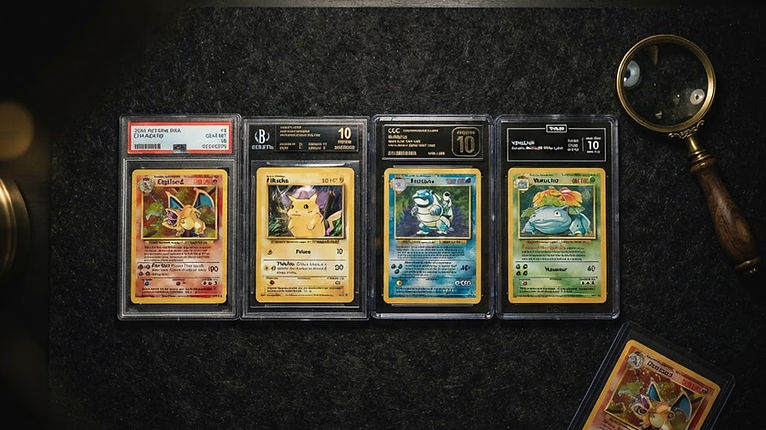
PSA vs CGC vs BGS vs TAG: Which Grading Company Is Best for Pokémon Cards?
Once you decide a Pokémon card is worth grading, the next question comes fast: which company should grade it? PSA, CGC, Beckett (BGS), SGC and TAG all grade Pokémon cards, and collectors argue about them constantly.
Choosing a company only matters if grading the card makes sense in the first place, which is what Is It Worth Grading Pokémon Cards? works through.
There is no single winner. The right choice depends on the card, why you are grading it and whether you plan to sell. This guide compares the main companies in plain terms and gives you a simple way to choose, card by card.
If you have not decided whether to grade at all, start with our guide on whether it is worth grading Pokémon cards.
The rest of this article explains why.
| Company | Grade style | Subgrades | Often chosen for |
|---|---|---|---|
| PSA | One overall grade, 1 to 10 | No | Wide recognition and resale |
| CGC | 1 to 10 in half points, Pristine 10 above Gem Mint 10 | On some services | Modern TCG cards and clear labels |
| BGS (Beckett) | 1 to 10 in half points | Yes, four subgrades | Subgrades and the rare Black Label |
| SGC | 1 to 10 in half points | No | Clean look, popular with sports collectors |
| TAG | 1 to 10, with a detailed digital report | Report shows flaws in detail | Transparency on how the grade was reached |
Grading services, label designs and options change over time, so always check each company's own website for its current details and pricing before you submit.
If you are only choosing between PSA and CGC, the decision usually comes down to what you plan to do with the card.
In short, CGC vs PSA is not about which company is "better" but about which slab your buyers, or you, value most for that card.
PSA is the name most Pokémon collectors know first. It gives one overall grade, with 10 (Gem Mint) at the top, and its red label slabs are instantly recognizable.
Why collectors pick PSA:
What to keep in mind: PSA does not give subgrades, so a buyer only sees one number. Demand for PSA can also mean longer waiting times at busy periods, depending on the service level you choose.
CGC started with comic books and is now a major grader for trading card games, including Pokémon. It uses a half-point scale and separates a Pristine 10, its very top grade, from a Gem Mint 10.
Why collectors pick CGC:
What to keep in mind: For some cards, CGC slabs sell for less than PSA slabs at the same number. For others, the gap is small. Check sold prices for your specific card before assuming either way.
Beckett gives four subgrades, for centering, corners, edges and surface, plus an overall grade in half points. Its most famous grade is the Black Label: a Pristine 10 where all four subgrades are 10. It is very rare and highly sought after.
Why collectors pick BGS:
What to keep in mind: A BGS 9.5 and a PSA 10 are not the same thing, and buyers price them differently depending on the card. A card with one weak subgrade can end up with a lower overall grade than you expected.
SGC is best known in sports cards, especially vintage, and for its black "tuxedo" label. It also grades Pokémon and other trading card games.
Why collectors pick SGC:
What to keep in mind: In the Pokémon market, SGC slabs are seen less often than PSA, CGC or BGS. That can affect how easy a card is to sell and how buyers value it, so compare sold prices for your card first.
TAG is a newer grader that uses imaging technology as part of its process. Along with the grade, it provides a detailed digital report that shows where it found flaws on the card.
Why collectors pick TAG:
What to keep in mind: As a newer company, TAG slabs have a shorter sales history than the older graders. Buyer demand for TAG graded Pokémon cards is still developing, so check recent sales for your card.
This is the most important point in the whole comparison. A 10 from one company and a 10 from another can sell for very different amounts. So can a 9. The difference comes from buyer trust, how strict each company is seen to be, how many graded copies exist and plain habit in the market.
That gap also changes by card and era. A company that leads for modern alt arts may not lead for vintage holos. This is why the best approach is not to pick a favorite company forever, but to check the market for each card you plan to grade.
Use these five steps before every submission:
Before you submit, inspect centering, corners, edges and surface carefully. Our trading card condition and grading guide explains what graders look for.
Fake slabs exist for every major company. Whichever grader a card comes from, check the certification number on that company's official website and make sure the card, grade and label details match. Compare the slab with photos of known genuine slabs from the same company. For more warning signs, read how to spot fake Pokémon cards.
When you sell, show the full slab clearly, front and back, so buyers can read the label and certification number. Our guide to photographing trading cards covers glare-free photos of slabs, and how to ship trading cards safely covers packing them.
PullBull is a marketplace built only for collectible trading cards. Sellers get their own stores and list cards as timed auctions, and buyers can filter listings by condition and by graded or raw. Each auction shows its opening bid, bid history and a bid trend chart, which helps when you want to see how much interest a graded card is attracting. New to the format? Read how online card auctions work.
PullBull is in an early, pre-launch stage, so the number of listings is still small. Paid checkout and payment protection are not active yet. Buyers and sellers use the contact seller button to agree on packing, tracking and who pays postage before going ahead. Learn more in what is PullBull?
Have PSA, CGC, BGS or TAG graded cards to buy or sell? Explore collector stores and timed card auctions. Browse auctions on PullBull
PSA vs CGC: which is better for Pokémon cards? For resale, PSA is the most widely recognized for Pokémon and often sells for more at the same grade. CGC is a strong choice for collectors who want a detailed scale and clear slabs. Compare recent sold prices for your card in both slabs before choosing.
Do CGC graded cards sell for less than PSA? Often, yes, at the same number, but not always. The gap depends on the card, the grade and the buyer. Check sold listings for your exact card before you submit.
Which grading company is best for Pokémon cards? There is no single best. PSA is the most widely recognized for Pokémon, but CGC, BGS, SGC and TAG all have fans. For selling, check which company's slabs sell best for your exact card at a realistic grade.
Is a CGC 10 the same as a PSA 10? No. They are separate companies with their own standards, and buyers often price the same number differently. CGC also has a Pristine 10 above its Gem Mint 10.
What is a BGS Black Label? It is a Beckett Pristine 10 where all four subgrades, centering, corners, edges and surface, are 10. It is very rare.
Are TAG graded cards worth it? TAG's detailed report appeals to collectors who want to know exactly how a grade was reached. Because TAG is newer, its sales history is shorter, so check recent sold prices for your card before choosing it for resale.
Can I regrade a card with a different company? Yes. Collectors sometimes crack a card out of one slab and submit it to another company, hoping for a better grade or a slab that sells better. It carries risk: the card can be damaged while removing it, and the new grade can be lower.
Can I sell graded cards from any company on PullBull? Yes. Sellers can list graded and raw cards, and buyers can filter by graded or raw. Paid checkout and payment protection are not active yet, so buyers and sellers arrange packing, tracking and postage through the contact seller button.
PSA, CGC, BGS, SGC and TAG can all grade your Pokémon cards well. The best choice is the one that fits each card and your goal. If you plan to sell, let sold prices at a realistic grade decide. If you plan to keep the card, choose the slab and service you trust and enjoy. When you are ready to buy or sell, browse auctions on PullBull.
Related: Is it worth grading Pokémon cards? · Trading card condition and grading guide · How much are my Pokémon cards worth? · How to spot fake Pokémon cards · Pokémon card auction sites compared
Browse live auctions and listings on PullBull.
Browse Pokémon card auctions on PullBull