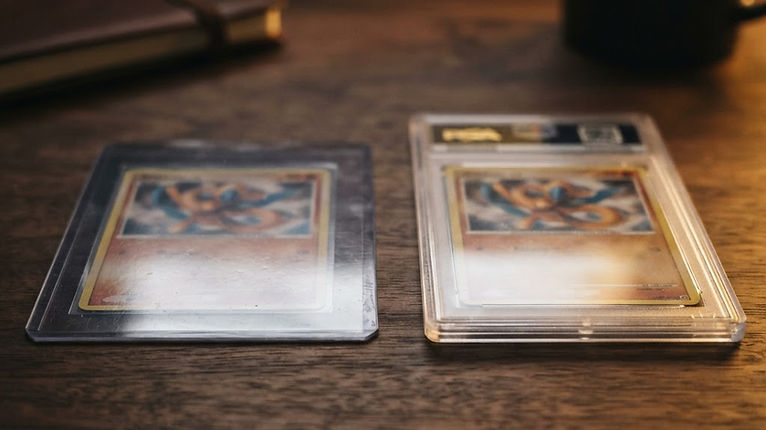
Raw vs Graded Pokémon Cards: Which Should You Buy or Collect?
Every Pokémon collector hits the same question sooner or later. You find the card you want, and there are two kinds of listings: a raw copy in a sleeve and a graded copy sealed in a plastic slab, usually at a very different price. Which one is the better buy?
There is no single right answer. Raw and graded cards each have clear strengths, and the best choice depends on the card, your budget and what you plan to do with it. This guide explains the differences in plain language so you can decide with confidence.
What raw and graded mean
A raw card is any card that has not been professionally graded. It might be fresh from a pack, kept in a binder for years, or stored in a sleeve and top loader. Its condition is described by the seller, often with terms like Near Mint or Lightly Played.
A graded card has been sent to a grading company such as PSA, CGC or BGS. The grader checks that the card is authentic, rates its condition on a number scale, and seals it in a tamper-evident case with a label and a certification number. If you want to know how the big graders differ, read our comparison of PSA vs CGC vs BGS for Pokémon cards.
The quick comparison
Raw cards
- Usually cheaper for the same card
- You can hold, play with and display them freely
- Condition is the seller's opinion, so there is more room for disagreement
- Higher risk of fakes or hidden flaws when buying online
- Potential upside if the card later grades well
Graded cards
- Usually more expensive, especially at high grades
- Condition and authenticity are checked by a third party
- Easier to compare prices, because sales are tied to a specific grade
- Protected by a hard case, but you cannot touch the card itself
- You pay for the grade, so there is less surprise upside
When buying raw makes sense
- You want the card for a binder or for play. If you love the artwork or want to complete a set, a clean raw copy gives you the same card for less money. Most collectors keep the majority of their collection raw.
- The card is not very valuable. For many common and modern cards, the cost and wait of grading are more than the difference between raw and graded prices. Our guide on whether it is worth grading Pokémon cards covers how to think about that math without guessing.
- You know how to judge condition. If you can spot whitening, scratches, dents and off-center printing, you can find raw cards in great shape. Learn the basics in our trading card condition and grading guide and our guide on how to check centering on Pokémon cards.
- You want to grade it yourself. Some collectors buy raw cards that look sharp, then submit them for grading. This can pay off, but it is not guaranteed. A card that looks perfect in photos can still come back with a lower grade than you hoped.
When buying graded makes sense
- The card is expensive. The more a card costs, the more a third-party check matters. For vintage holos, chase cards and high-value modern cards, a graded copy removes a lot of guesswork about authenticity and condition.
- You are buying online from someone you do not know. Photos can hide flaws. A grade from a known company gives both sides a shared reference point. Still, verify the slab itself, because fake slabs exist. Our guide on how to spot a fake PSA slab walks through the checks.
- You care about resale. Graded cards are often easier to sell, because buyers know exactly what they are getting and can compare recent sales at the same grade. See our guide to the best place to sell graded Pokémon cards.
- You want long-term protection. A slab protects a card from bends, moisture and handling. For a card you plan to keep for years, that is real peace of mind.
Hidden costs and risks on each side
Raw card risks
- Condition disputes. One person's Near Mint is another person's Lightly Played. Ask for clear photos of the front, back, corners and edges.
- Fakes. Counterfeit raw cards are common online. Learn the warning signs in how to spot fake Pokémon cards.
- Trimmed or altered cards. Some raw cards have been cut, cleaned or pressed to look better. A grader may catch this later, but you will have already paid.
- Damage in shipping. Raw cards need careful packing. Sellers can follow our guide on how to ship trading cards safely.
Graded card risks
- Paying too much for a number. The gap between two grades can be large. Check recent sold prices for the exact grade before you bid.
- Fake or tampered slabs. Always look up the cert number on the grader's official website and match every detail.
- Grade differences between companies. The same number from two different graders may not sell for the same price. Compare like with like.
- Cracked or scratched cases. Damage to the case does not change the grade, but it can affect how buyers see the card.
How to decide: a simple checklist
Ask yourself these questions before you buy:
- What will I do with this card? Binder, play or display points toward raw. Long-term holding or resale points toward graded.
- How much does it cost? The higher the price, the more a graded copy makes sense.
- Can I verify condition myself? If not, a grade does that work for you.
- Do I trust the seller? Clear photos, honest descriptions and quick answers matter for raw cards. Verifiable cert numbers matter for graded ones.
- What is the price gap? Compare recent sold prices for raw copies and each grade. If a high-grade slab costs far more than a clean raw copy, decide whether the certainty is worth it to you.
If you are not sure what a card is worth in the first place, start with our guide on how much your Pokémon cards are worth.
Tips for buying raw cards online
- Ask for photos of the front and back in good, even light, without heavy filters.
- Look closely at corners, edges and the back border, where whitening shows first.
- Check centering by comparing the borders on each side.
- Compare the card to known genuine copies, including font, color and holo pattern.
- Be careful with prices that seem far too good to be true.
When you receive the card, sleeve it and store it properly. See how to store Pokémon cards.
Tips for buying graded cards online
- Type the cert number into the grader's official lookup yourself.
- Match the card name, set, number, variant and grade with the label and the card.
- Look for signs of tampering on the case, like pry marks, glue or cloudy seams.
- Compare the price with recent sales for the same card, grade and grader.
- In an auction, decide your maximum bid before it ends. Our guide on how much to bid on Pokémon cards helps you set it.
Raw and graded on PullBull
PullBull is a marketplace for collectible trading cards built around auctions and collector-run seller stores. The market lets you filter Pokémon cards by set, condition and whether a card is graded or raw, so you can compare both kinds side by side. PullBull is still pre-launch, so features are being built step by step.
When you are ready to look around, browse the PullBull market and compare raw and graded listings for the cards you collect.
FAQ
Are graded Pokémon cards always worth more than raw ones?
Not always. A high grade usually adds value, but a low grade can sell for about the same as a nice raw copy, or less. It depends on the card and the grade.
Is it cheaper to buy raw and grade it myself?
Sometimes, but it is a gamble. You pay grading costs and wait, and the card may come back with a lower grade than you expected.
Can a raw card be fake?
Yes. Raw cards have no third-party check, so learn the common signs of fakes and buy from sellers who show clear photos.
Can a graded card be fake?
Yes. Fake slabs and tampered cases exist. Always verify the cert number on the grader's official website.
Should beginners buy raw or graded cards?
For low-cost cards, raw is fine and more fun. For expensive cards, beginners often feel safer with a graded copy from a well-known grader, after checking the slab.
Does a slab protect a card forever?
It protects against handling, bends and dust, but you should still store slabs away from direct sunlight, heat and moisture.
Bottom line
Raw cards give you lower prices, freedom to handle your cards and a chance at upside. Graded cards give you a third-party check, easier comparisons and strong protection. Buy raw for your binder and for cards you can judge yourself. Buy graded when the price is high, the seller is unknown or you plan to resell. Either way, check photos, verify details and compare recent sales. When you are ready, visit PullBull.
Ready to find your next card?
Browse live auctions and listings on PullBull.
Browse Pokémon card auctions on PullBull