
How to Win Online Card Auctions: Bidding Tips, Sniping and Mistakes to Avoid
PullBull TeamUpdated 10 min read
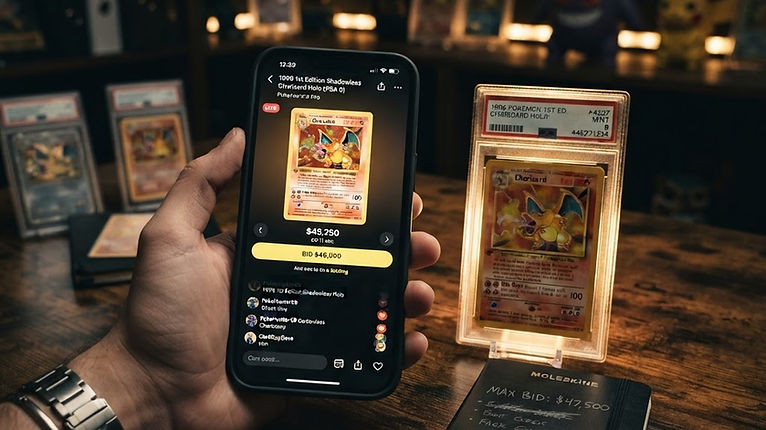
How to Win Online Card Auctions: Bidding Tips, Sniping and Mistakes to Avoid
Online auctions are one of the best ways to buy trading cards. You can find cards that are not listed anywhere else, and sometimes you get a card below its usual price because few people were watching at the right moment. But auctions can also go the other way. It is easy to get caught up in a bidding war and pay far more than you planned.
If any of the terms below are new to you, start with How Online Card Auctions Work for the basics.
Winning an auction is not about clicking fastest. It is about knowing what a card is worth, deciding your limit before you start, and bidding calmly. This guide walks through a simple process that works on most card auction sites, plus the common mistakes that cost collectors money.
If you are new to auctions, start with our explainer on how online card auctions work, which covers opening bids, bid increments and how an auction ends.
Every good bid starts with research. Before you place a single bid, find out what the same card has actually sold for recently.
For a full walkthrough of pricing a card, see how much are my Pokémon cards worth? The same method works whether you are buying or selling.
It also helps to first pick the right venue. Here's our comparison of Pokémon card auctions online.
This is the most important habit in auction buying. Decide the highest price you are willing to pay, write it down, and do not go above it.
When you set your maximum, include the full cost, not only the hammer price:
A good rule of thumb: if you would be upset to pay that price, it is above your real maximum. Losing an auction at a fair price is better than winning one you regret.
A low price is not a win if the card is not what you expected. Before bidding, look closely at the listing.
Ask yourself whether the photos show the actual card, front and back, in good light. Look at the corners, edges and surface. Blurry photos, only a front photo, or stock images are warning signs. If you need more photos, message the seller and ask. A good seller will be happy to help. Our guide on how to photograph trading cards shows what a complete set of photos looks like.
Compare the photos with the condition the seller lists. If a card is called near mint but you can see whitening on the back edges, trust the photos. Our trading card condition and grading guide explains what each condition level usually means.
For valuable cards, check for signs of a fake: wrong fonts, odd colors, a missing or wrong card number, or a finish that looks too glossy or too flat. For graded cards, check the certification number on the grading company's website and make sure the card and label match. Read more in how to spot fake Pokémon cards.
Look at the seller's store, other listings and any history the site shows. Do their other cards look consistent and well photographed? Do they answer questions clearly? Trust your instincts. If something feels off, skip the auction.
Timing matters in auctions, but probably less than you think. Here are the main approaches.
Placing a bid early shows interest and puts you in the running. The downside is that it can also signal to other collectors that the card is worth watching, and it gives everyone time to outbid you.
Sniping means placing your bid in the last moments of an auction, so other bidders have little or no time to respond. Many collectors use it because it avoids long bidding wars and keeps prices closer to fair value.
Sniping works best when:
Sniping has limits. Some sites extend the auction when a bid arrives near the end, which turns the last moments into a normal bidding round. Always read the site's auction rules so you know exactly how and when an auction closes.
If a site lets you enter a maximum that it bids up to for you, entering your true limit once can be the calmest way to bid. Not every site works this way, so check before you rely on it. If a site only accepts manual bids, you will need to watch the end of the auction yourself.
Whichever approach you choose, the rule from Step 2 still applies: never bid above your written maximum just because the clock is running out.
Some of the best results come from auctions that get less attention.
Use watchlists and follow stores you like, so you see new auctions as soon as they go up.
Winning is not the end of the process. Message the seller promptly, confirm the final price and shipping, and agree on how the card will be packed. A valuable card should travel in a penny sleeve and toploader inside a bubble mailer or box, with tracking. Our guide on how to ship trading cards safely explains what good packing looks like, so you know what to ask for.
When the card arrives, open it carefully, compare it with the listing photos, and store it properly right away. Our guide on how to store Pokémon cards covers sleeves, toploaders and binders.
PullBull is a card-focused marketplace built around collector stores and timed auctions. Each auction shows its opening bid, bid history and a bid trend chart, so you can see how interest in a card has grown before you decide on your maximum. Buyers can keep a watchlist, follow stores and contact sellers to ask for more photos or details.
PullBull is in an early, pre-launch stage, so the number of listings is still small. Paid checkout and payment protection are not active yet. Buyers and sellers use the contact seller button to agree on payment, packing, tracking and postage before going ahead. Learn more in what is PullBull?
Want to see how timed card auctions look? Browse auctions on PullBull
How do I win an online card auction without overpaying? Check recent sold prices for the exact card and condition, set a maximum that includes shipping and any fees, and do not go above it. Losing at a fair price is better than winning at a bad one.
Is sniping a good strategy for card auctions? It can be. Bidding in the final moments avoids long bidding wars on sites with a fixed end time. Some sites extend an auction when a late bid comes in, so read the rules before you plan to snipe.
When is the best time to bid on a card auction? Many collectors bid near the end, once they know their maximum. Auctions that end at unusual hours often get fewer bidders, which can mean better prices.
What should I check before bidding on a trading card? Clear photos of the front and back, the listed condition compared with what you see, signs of a fake, the grading certification number for slabs, and the seller's history.
Should I bid on raw or graded cards? Graded cards are easier to judge and trust, but cost more. Raw cards can be better value if the photos are clear and you are confident reading condition.
What should I do after winning an auction? Contact the seller quickly, confirm the price, payment and shipping, ask for safe packing with tracking, and check the card against the listing when it arrives.
Winning card auctions comes down to preparation, not speed. Research sold prices, set a written maximum that includes every cost, check the photos and seller carefully, and pick a bidding style you can stick to. Do that, and you will win the auctions that are worth winning and walk away from the rest. When you are ready to try timed card auctions, browse auctions on PullBull.
Related: How online card auctions work · Pokémon card auction sites · How to spot fake Pokémon cards · How much are my Pokémon cards worth?
Browse live auctions and listings on PullBull.
Browse Pokémon card auctions on PullBull