
What Is a Shadowless Pokémon Card? How to Identify Shadowless Base Set Cards
PullBull TeamUpdated 9 min read
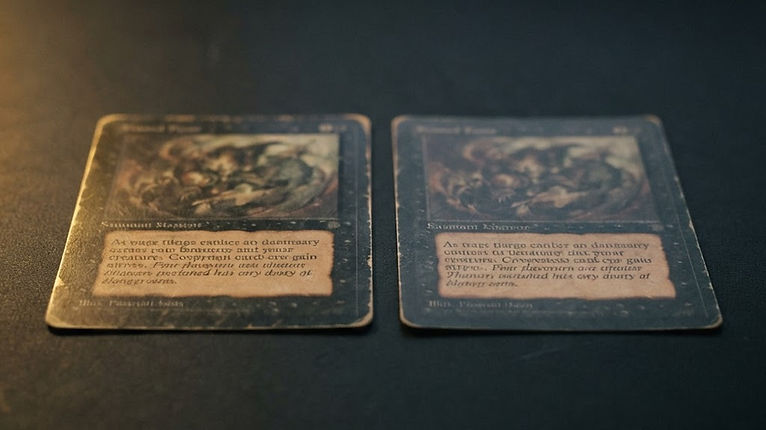
If you have an old stack of Pokémon cards from the late 1990s, you may have heard collectors talk about "shadowless" cards. The word sounds mysterious, but it describes one small printing detail. That detail can make a real difference to how collectors see a card and what they will pay for it.
This guide explains what shadowless means, how to check your own cards in a few seconds, how shadowless relates to 1st Edition, and what to watch for when you buy or sell one.
The original English Pokémon Trading Card Game launched with the Base Set, printed by Wizards of the Coast. Early print runs of Base Set cards had a flat art box. Later in the print run, the design was updated to add a drop shadow along the right side and bottom of the frame around the artwork. That shadow made the art look like it was raised off the card.
Cards from the earlier runs, which lack that shadow, are called shadowless. Cards from the later runs, which have it, are often called shadowed or simply Unlimited.
So a shadowless card is not a special variant that was printed on purpose. It is an earlier version of the same card, made before a design change.
Shadowless is a Base Set term. When collectors say shadowless, they almost always mean the English Base Set from Wizards of the Coast. Later Wizards sets such as Jungle and Fossil were printed with the shadowed design, so you will not normally see the term used for them.
Japanese Base Set cards use a different card design entirely, so the shadowless versus shadowed comparison does not apply in the same way.
You do not need any tools for the first check. Hold the card in good light and look at the frame around the artwork.
This is the main test. On a shadowed card, there is a dark band running down the right side of the art window and along its bottom, like a shadow cast by the picture. On a shadowless card, that band is missing and the art frame looks flat and even on all sides.
The easiest way to learn it is to compare two Base Set cards side by side. Once you have seen the difference once, you will spot it instantly.
Many collectors also notice that the text on shadowless cards looks a little different. The HP number and some of the attack text often look thinner and lighter on shadowless cards, and bolder on later shadowed prints. Use this as a supporting clue, not the main test.
Look at the small copyright text along the bottom of the card. Collectors often use this line to tell different Base Set print runs apart, because the wording and years changed between printings. If you are unsure, compare your card's line with a verified photo of the same card from a trusted source or a graded example. Do not rely on this line alone. Use it together with the shadow check.
Look at the left side of the card, just below the bottom left corner of the artwork. If there is a small black stamp that says "Edition" with a 1 in a circle, the card is 1st Edition. Every 1st Edition Base Set card is also shadowless. Our guide on how to tell if a Pokémon card is 1st Edition covers the stamp in detail.
Base Set cards fall into three broad groups that collectors talk about most:
In general, collectors treat earlier versions as more desirable, but the value of any single card still depends on which Pokémon it is, its rarity and above all its condition. A heavily played shadowless card can be worth less than a sharp shadowed copy of the same card. Do not assume a big number just because a card is shadowless.
Once you know which version you have, find what that exact version is actually selling for:
Our guide on how much your Pokémon cards are worth walks through this process step by step.
Base Set cards are more than 25 years old, and many were played with, shuffled and stored loose. Before you decide what a shadowless card is worth, check it closely:
Corners and edges. Look for whitening, especially on the blue back.
Surface. Tilt the card under a light to see scratches on the holo and print lines.
Centering. Compare the yellow borders on each side. Vintage cards are often off center. See how to check centering on Pokémon cards.
Bends and dents. A crease has a big effect on value.
For a full breakdown of condition terms like Near Mint and Lightly Played, read our trading card condition and grading guide.
Grading can make sense for shadowless holos and other cards in strong condition, because a grade confirms authenticity and gives buyers a shared reference for condition. Graders also note the version on the label, so a buyer can see at a glance that a card is shadowless or 1st Edition.
Grading costs money and takes time, though, and a card in rough shape may not gain enough to cover it. Our guides on whether it is worth grading Pokémon cards and PSA vs CGC vs BGS help you decide. If you are weighing a raw copy against a slabbed one, see raw vs graded Pokémon cards.
Because shadowless and 1st Edition cards attract interest, they also attract fakes and confusing listings. When buying:
For general warning signs, read how to spot fake Pokémon cards.
Auctions are a common way to buy vintage cards. A few habits help you avoid overpaying:
Our guide on how much to bid on Pokémon cards explains how to set a sensible limit.
If you own shadowless cards, protect them. Put each card in a soft sleeve, then a top loader or semi rigid holder, and keep them away from sunlight, heat and humidity. See how to store Pokémon cards for more.
PullBull is a marketplace for collectible trading cards built around auctions and collector-run seller stores. You can filter Pokémon cards by set, including Base Set, and by condition and graded or raw. PullBull is still pre-launch, so features are being built step by step.
When you are ready, browse the PullBull market and see what Base Set cards collectors are listing.
What does shadowless mean on a Pokémon card? It means the card has no drop shadow along the right side and bottom of the art box. It comes from an early print run of the English Base Set, before the shadow was added to the design.
Are all 1st Edition Base Set cards shadowless? Yes. Every 1st Edition Base Set card is shadowless. Not every shadowless card is 1st Edition, though. Unlimited shadowless cards have no stamp.
Are shadowless cards rare? They were printed in smaller numbers than the later shadowed Unlimited cards, so collectors generally see them as harder to find. How rare a specific card is still depends on the Pokémon, its rarity symbol and its condition.
Are shadowless Pokémon cards worth more? Often, yes, compared with the same card in shadowed form and similar condition. But condition matters a lot. Always check recent sold prices for the exact version and condition.
Do Jungle or Fossil cards come in shadowless? The term is used for the English Base Set. Jungle, Fossil and later Wizards sets were printed with the shadowed design.
How do I check if my shadowless card is real? Compare it to known genuine cards, check fonts, colors, holo pattern and card stock, and be careful with listings that show a 1st Edition stamp on a shadowed card. For valuable cards, a grade from a well-known grader adds confidence.
A shadowless Pokémon card is an early English Base Set card without the drop shadow next to the artwork. To check yours, look at the right edge of the art box, then use fonts, the copyright line and the 1st Edition stamp as extra clues. Shadowless cards are generally more sought after than shadowed ones, but condition and authenticity decide the real value. Check sold prices, inspect photos and verify slabs before you buy. When you are ready, visit PullBull.
Browse live auctions and listings on PullBull.
Browse Pokémon card auctions on PullBull