
Pokémon Card Auction Sites Compared: Where to Buy and Sell Cards at Auction
PullBull TeamUpdated 10 min read
Pokémon Card Auction Sites Compared: Where to Buy and Sell Cards at Auction
Auctions are one of the best ways to find out what a Pokémon card is really worth. Instead of guessing a fixed price, you let collectors compete, and the final bid becomes the price. But not every auction site works the same way. Some are built for live streams, some for high-end slabs worth thousands, and some for everyday raw cards.
This guide compares the main Pokémon card auction sites, explains who each one suits best and gives you a simple checklist for choosing where to buy or sell.
The right site depends on the value of the card, whether it is raw or graded, and how much time and effort you want to put into selling.
Before looking at individual sites, it helps to know what actually matters:
eBay is the default place most collectors start. You can run a classic timed auction, set a Buy It Now price, or combine the two. eBay also owns TCGplayer and the Goldin auction house, which shows how central it is to the card market.
Best for: almost any card, from cheap singles to high-end graded slabs, when you want the widest possible audience.
Strengths:
Things to keep in mind:
Whatnot is a live-stream shopping app. Sellers go live, show cards on camera and run fast auctions, often lasting only seconds. Pack breaks and mystery giveaways are a big part of the culture.
Best for: sellers who enjoy streaming and building a community, and buyers who like the excitement of live bidding.
Strengths:
Things to keep in mind:
Goldin is a premium auction house, owned by eBay, known for record-setting sales of sports cards and high-end Pokémon cards. It runs curated auction events with professional photography and marketing.
Best for: valuable graded cards, vintage grails and collections where presentation and reach to serious buyers matter.
Things to keep in mind:
Heritage Auctions is a large auction house that covers many collectibles, including a dedicated trading card category with Pokémon. It runs both weekly online auctions and larger signature events.
Best for: higher-value cards and collectors who want a traditional auction house experience.
Things to keep in mind:
Fanatics Collect, formerly known as PWCC, offers a vault, weekly auctions, premier auctions and Buy Now listings. It has deep roots in sports cards but also lists Pokémon and other TCGs.
Best for: graded cards, especially if you like the idea of storing cards in a vault and selling without shipping each one.
Things to keep in mind:
Alt is a platform for graded cards that combines a vault, a marketplace, auctions and its own pricing data. Many users store their slabs with Alt and trade them inside the platform.
Best for: collectors who treat graded cards partly as an investment and want vault storage and price tracking in one place.
Things to keep in mind:
A growing number of independent card marketplaces have launched in recent years, many promising lower fees or a friendlier experience than the big platforms. They can be good places to find less competition and more personal contact with sellers.
The tradeoff is audience size. A new marketplace usually has fewer buyers and fewer listings, so popular cards may sell for less than they would on eBay, at least for now. Read each site's terms carefully, especially around payment, shipping and disputes.
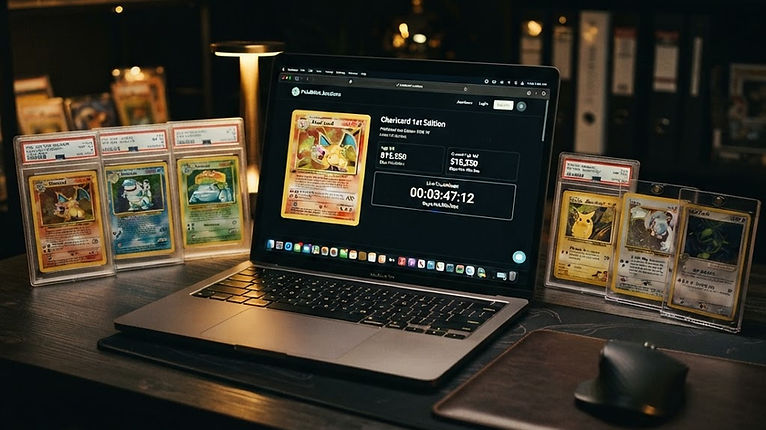
PullBull is a marketplace for collectible trading cards built around seller stores and timed auctions. Each seller gets their own store, and each auction shows an opening bid, a bid history and a bid trend chart, so you can see how interest in a card develops. Buyers can add auctions to a watchlist, follow stores they like and contact sellers directly. There is no live stream to sit through: you place a bid and check back before the auction ends.
PullBull is in an early, pre-launch stage, so the number of stores and listings is still small. Paid checkout and payment protection are not active yet. If you buy or sell, use the contact seller button to agree on packing, tracking and who pays postage before you go ahead. To learn more, read what is PullBull?
Prefer calm, timed auctions? Browse collector stores and bid on raw and graded cards at your own pace. Browse auctions on PullBull
What is the best site to auction Pokémon cards? There is no single best site. eBay has the largest audience, Whatnot suits live sellers, and premium houses such as Goldin and Heritage suit high-value graded cards. Match the site to your card's value and how you like to sell.
Is it better to sell Pokémon cards at auction or at a fixed price? A fixed price works well when you know the market value and the card sells often. An auction works well for in-demand cards or cards with few recent sales, because buyers set the price.
What is a buyer's premium? It is an extra charge added on top of the winning bid, usually a percentage, that the buyer pays to the auction site. Many auction houses use it, so always include it when you decide your maximum bid.
Can I auction raw, ungraded Pokémon cards? Yes. General marketplaces and many smaller sites accept raw cards. Premium auction houses and vault platforms focus mostly on graded cards.
Do I need to grade a card before auctioning it? No, but grading can help valuable cards in excellent condition sell for more and gives buyers confidence. For lower-value cards, the cost and wait time of grading usually are not worth it.
How long do online card auctions last? It depends on the site. Live-stream auctions can last seconds, while timed online auctions often run for several days. Premium events follow their own schedules.
The best Pokémon card auction site is the one that fits your card. Use the biggest marketplaces for reach, live-stream apps if you enjoy selling on camera, and premium auction houses or vault platforms for high-value slabs. Whatever you choose, research sold prices first, show clear photos, describe condition honestly and check every fee and term before you list or bid. When you want timed auctions without the live-stream rush, browse auctions on PullBull.
Related: How online card auctions work · How much are my Pokémon cards are worth? · Trading card condition and grading guide · How to spot fake Pokémon cards · How to photograph trading cards · How to ship trading cards safely · What is PullBull?
Browse live auctions and listings on PullBull.
Browse auctions on PullBull
Find out what your Pokémon cards are really worth: identify the exact card, judge condition, check sold prices and avoid the most common pricing mistakes before you buy or sell.

Learn how to photograph trading cards with just a phone: lighting, backgrounds, angles, holo and slab shots, and the exact photo set buyers want to see before they bid.

Opening bids, reserves, bid increments, proxy bids, sniping and buyer's premiums explained, plus how to bid and sell smarter in online trading card auctions.


