
How to Pack Pokémon Cards for Grading (Sleeves, Toploaders and Submission Tips)
PullBull TeamUpdated 8 min read
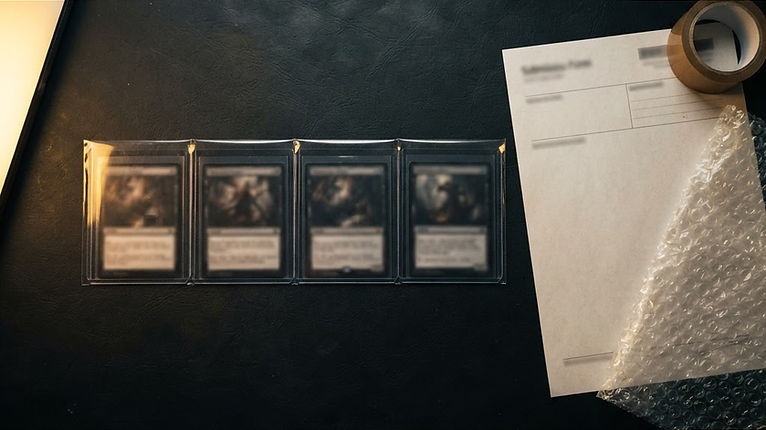
You decided a card is worth grading. Now comes the step many collectors rush: packing it so it survives the trip. A bent corner or scratched holo in transit can cost you a grade even when the card left your desk looking sharp.
This guide covers the materials most collectors use, a simple packing order that works for PSA, CGC, BGS and similar services, and mistakes that damage cards before a grader ever sees them.
Packing well only helps if the card is a good candidate. Check corners, edges, surface and centering in bright light, compare recent raw and graded sold prices, and factor in grading cost and wait time. See whether it is worth grading Pokémon cards, raw vs graded Pokémon cards, how to check centering on Pokémon cards, and PSA vs CGC vs BGS for Pokémon cards.
You do not need a huge kit. These basics cover most submissions:
Work on a clear, flat table with good light. Wash and dry your hands, or use gloves if you prefer. Keep food, drinks and paper dust away from the cards.
Do not wipe, polish or "clean" a valuable card with chemicals, erasers or cloths before grading. Scratches, residue and removed print can all hurt a grade. Light dust is better left alone than scrubbed.
Before anything goes into a sleeve:
A clear list reduces mix-ups when cards come back and makes it easier to track which card got which grade.
Slide the card into a soft sleeve with the open end of the sleeve at the top of the card (toward the Pokémon name) or following the grading company's preferred orientation. The sleeve should fit snugly without forcing the card. Air out trapped dust by gently pressing the sleeve flat once the card is inside.
Tips that prevent scratches:
Next, place the sleeved card into a toploader or a semi-rigid holder.
Toploaders. Slide the sleeved card in slowly. The sleeve opening should face the closed end of the toploader when possible, so the card cannot slip out if the toploader tips. Do not jam the card. If it sticks, the sleeve may be bunched; back it out and try again.
Semi-rigid holders. These open like a folder. Seat the sleeved card fully inside so the edges sit in the molded area. Close gently. Many graders prefer these for mail-in submissions because they can remove the card with less force than a tight toploader.
Follow the packing instructions on the grading company's website for the service level you chose. Rules can differ on whether they want toploaders, semi-rigids, or cards sleeved only.
Slip each toploader or semi-rigid into a team bag. Seal it with a small piece of painter's tape or the bag's own seal. Keep tape off the card and off the sleeve opening. If you send several cards, number each bag to match your order form.
Stack the bagged cards neatly. Put cardboard or thin foam on both sides, then wrap the stack in bubble wrap so it cannot rattle. Shake gently. If cards still slide hard, add cushioning. Wrap a single high-value card on its own with extra bubble wrap.
Choose a box that is only a little larger than the wrapped stack. Fill empty gaps with crumpled paper, foam or more bubble wrap until nothing moves when you shake the closed box gently.
Avoid plain paper envelopes, huge half-empty boxes, heavy items on top of the cards, and rubber bands around the cards themselves. Put the order form in its own bag on top of the cushioning, and keep a photo of the packed contents plus a copy of the form.
Use tracking, and insure the package when the value justifies it. Address the box exactly as the grading company lists. Keep the receipt. Packing will not speed up grading, but poor packing can delay a submission if cards arrive loose or the box is crushed.
Watch for missing soft sleeves, pinch-tight toploaders, dusty sleeves, tape on the card, rubber bands, soft mailers for valuable cards, and no written inventory. Any of these can cost a grade.
If you are shipping slabs you already own (for a sale or reholder), keep them sealed, wrap each case in bubble wrap, use a rigid box, and photograph the cert numbers before they leave. For general shipping beyond grading, see how to ship trading cards safely.
Match each returned card to your list, look up the cert number on the grader's site, and check the case for shipping damage. Store slabs upright away from sun and heat; sleeve and topload any raw returns. See how to store Pokémon cards. If you plan to sell, clear photos and the cert help buyers. More options are in where to sell Pokémon cards and the best place to sell graded Pokémon cards.
PullBull is a marketplace for collectible trading cards built around auctions and collector-run seller stores. You can filter Pokémon cards by set, condition and whether a listing is graded or raw, which makes it easier to compare candidates before you submit anything. PullBull is still pre-launch, so features are being built step by step.
When you are ready, browse the PullBull market and see what collectors are listing.
Do I need a toploader to send cards for grading? Most collectors use a soft sleeve plus a toploader or a semi-rigid holder. Always follow the packing rules for the grading company and service level you chose, because preferences can differ.
Can I put more than one card in a sleeve? No. For grading, use one card per sleeve so surfaces do not rub and so each card stays easy to identify.
Should I clean my Pokémon cards before grading? Avoid cleaning chemicals, erasers and polishing. You can create new damage. Light dust is better left alone than scrubbed.
What size box should I use? Use a small, sturdy box that fits the wrapped stack with just enough room for cushioning. A box that is too large lets the contents bounce.
Is a bubble mailer enough? For low-value cards some people use rigid mailers, but valuable grading submissions are safer in a corrugated box with tracking and solid cushioning.
What if a card arrives damaged at the grader? Prevention is the goal: sleeve, rigid holder, bag, wrap and a tight box. Keep photos of the cards and the packed box, your form copy and tracking details so you have a record of how the package left you.
Packing Pokémon cards for grading is simple when you follow a clear order: inspect and list the cards, soft sleeve each one, add a toploader or semi-rigid holder, bag and label, wrap with cushioning, and ship in a snug rigid box with tracking. Skip cleaning tricks, rubber bands and flimsy envelopes. Good packing will not raise a grade on its own, but bad packing can lower one before the grader starts. When you are ready to look for your next card, visit PullBull.
Browse live auctions and listings on PullBull.
Browse Pokémon card auctions on PullBull