
Holo vs Reverse Holo Pokémon Cards: How to Tell Them Apart
PullBull TeamUpdated 8 min read
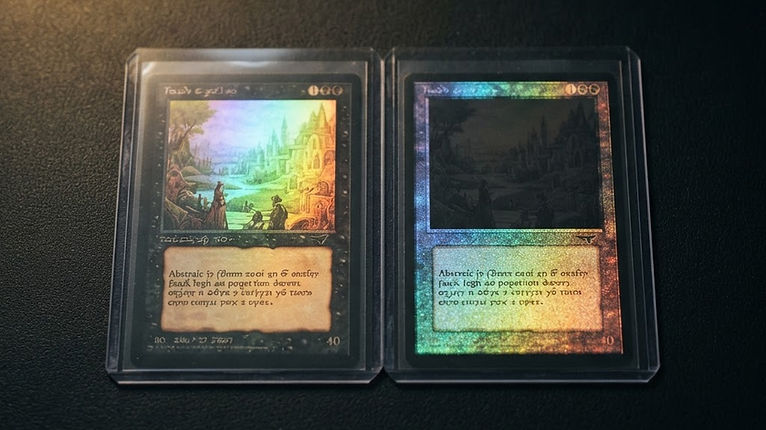
Two copies of the same Pokémon card can look almost identical in a listing photo and still be priced very differently. Very often the reason is the foil. One copy is a holo, the other is a reverse holo, and a third version might have no foil at all.
If you buy, sell or price cards, telling these versions apart is one of the most useful skills you can learn. It takes a few seconds once you know where to look. This guide explains what each version is, how to identify it, and why it matters when you put money on the line.
That is the core rule. Holo means the art shines. Reverse holo means everything except the art shines.
Holo cards were part of Pokémon from the very first English sets. In classic sets like Base Set, Jungle and Fossil, the holo rares have a bright foil layer behind the artwork, and the image seems to shimmer as you tilt the card. The rest of the card, including the yellow border, the name bar and the attack text, has a normal printed finish.
In many sets, the holo version of a card is its main rare version. That is why collectors often use phrases like holo rare or holo Charizard. When people talk about the most famous vintage cards, they are usually talking about holos.
Modern sets also have many special foil cards, such as full art cards, textured cards and alternate art cards. These often have foil or texture across the whole card, so they do not fit neatly into the simple holo or reverse holo labels. For those, the card number and rarity symbol are better guides. Our guide to what the symbols on Pokémon cards mean explains how to read them.
A reverse holo flips the idea. The artwork is flat, and the foil shine covers the frame around it. When you tilt a reverse holo under light, the border area, background and text box catch the light, while the Pokémon picture stays matte.
Reverse holos were added to English Pokémon sets in the early 2000s, so the classic early sets do not have them. In many modern sets, the same card number can exist as a regular non-holo card and as a reverse holo, and sometimes also as a holo. Some sets have special reverse holo patterns, such as designs that include a Poké Ball or other icons in the foil. Collectors treat those as their own versions with their own prices.
Holo, reverse holo and non-holo copies of the same card are different versions, and each has its own market. Depending on the card, one version can sell for much more than the others. There is no fixed rule about which is worth more. For some cards the holo is the chase version. For others, a reverse holo with a special pattern is harder to find and sells higher.
This is why you should always match the exact version when you check prices. A sale of a reverse holo tells you very little about what the holo is worth, and the reverse is also true. Our guide on how much your Pokémon cards are worth shows how to look up sold prices for the right version.
Condition matters just as much. Foil surfaces show scratches, scuffs and print lines more easily than regular finishes, especially under bright light. A holo with heavy scratches in the artwork window can be worth far less than a clean copy. Learn the basics in our trading card condition and grading guide.
Paying holo prices for a reverse holo. Listing titles are not always accurate. Some sellers write holo when they mean reverse holo, by mistake or on purpose. Always check the photos against the rule: where is the foil?
Mixing up 1st Edition and Unlimited too. Foil type is not the only detail that changes value. For older cards, the 1st Edition stamp can matter even more. See our guide on how to tell if a Pokémon card is 1st Edition.
Ignoring surface damage. Scratches on foil can be hard to see in photos taken straight on. Ask for angled photos in good light.
Trusting the shine as proof of authenticity. Counterfeit cards can have foil too. Some fakes have foil in the wrong place, a pattern that looks wrong, or a strange rainbow sheen across the whole card. Our guide on how to spot fake Pokémon cards covers the warning signs.
If you sell cards, clear foil information helps buyers trust you and helps your listing show up in the right searches.
In an auction, you usually have limited time to check a listing, so build a quick routine:
For valuable foil cards, a graded copy can remove some of the guesswork, because the label names the card and its variant. Read raw vs graded Pokémon cards to decide which fits you.
Foil cards deserve a little extra care. Keep them in soft sleeves, and use top loaders or binders with side-loading pockets for the ones you value. Avoid direct sunlight, heat and humidity, which can cause fading or curling. Foil cards are known to curl more than regular cards in some conditions, so storing them flat and in a stable environment helps. Our guide on how to store Pokémon cards has the full setup.
PullBull is a marketplace for collectible trading cards built around auctions and collector-run seller stores. In the market you can filter Pokémon cards by set, condition and whether a card is graded or raw, which makes it easier to compare listings for the cards you collect. PullBull is still pre-launch, so features are being added step by step.
When you know which version you want, browse the PullBull market and check the listings that match.
What is the difference between holo and reverse holo Pokémon cards? On a holo card, the foil shine is inside the artwork window. On a reverse holo, the foil covers the rest of the card while the artwork stays flat.
Is a reverse holo worth more than a holo? It depends on the card. Each version has its own market, so check recent sold prices for the exact version and condition.
Do vintage Pokémon cards have reverse holos? The earliest English sets, like Base Set, Jungle and Fossil, do not have reverse holos. Reverse holos were introduced in English sets in the early 2000s.
How can I check the foil type in a listing photo? Look for an angled photo or a short video. If only the artwork shines, it is a holo. If the border and text box shine, it is a reverse holo.
Can a fake card be holo? Yes. Some fakes have foil, but it is often in the wrong place or has an odd pattern. Compare it with known genuine copies.
Are full art and alternate art cards holos? They are special foil or textured cards, and they are usually treated as their own rarities rather than standard holos or reverse holos. Use the card number and rarity symbol to identify them.
The rule is simple. Holo means the artwork shines, reverse holo means everything except the artwork shines, and non-holo means nothing shines. Tilt the card, check the text box, compare with known copies and always price the exact version. When you are ready to look for your next card, visit PullBull.
Browse live auctions and listings on PullBull.
Browse Pokémon card auctions on PullBull